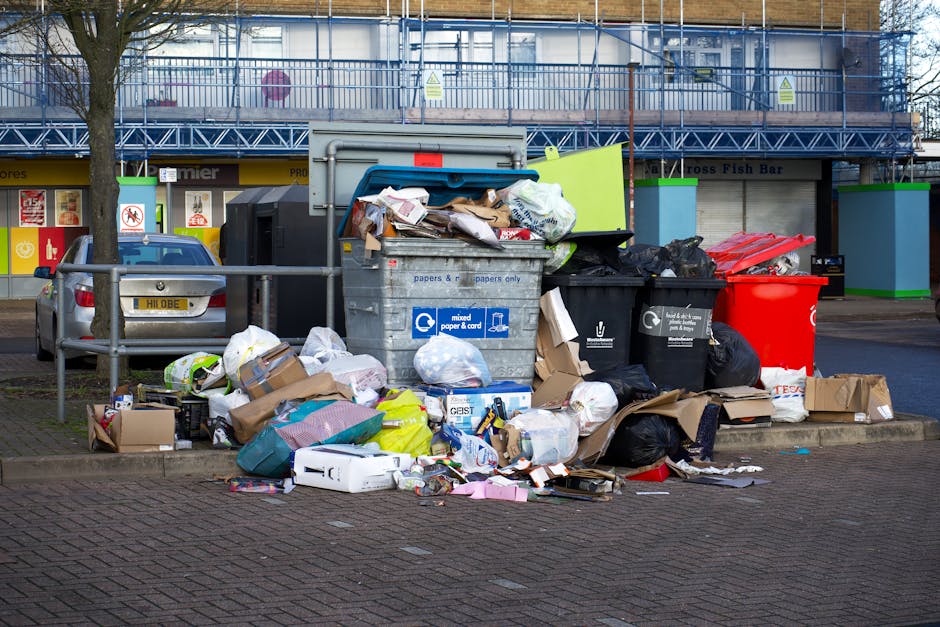
Avoid hidden rubbish removal charges Kilburn NW6
If you have ever booked a rubbish job and then watched the final price creep up, you will know how annoying it feels. A quote that looked tidy at first can suddenly grow teeth: access fees, minimum-load surprises, extra labour, disposal add-ons. In a busy part of London like Kilburn NW6, where flats, stairwells, parking and time pressure all shape the job, learning how to avoid hidden rubbish removal charges Kilburn NW6 is not just sensible, it saves real money and stress.
This guide breaks the whole thing down in plain English. You will learn how pricing usually works, what to ask before you book, which warning signs to look out for, and how to compare rubbish removal options without getting caught by fine print. We will keep it practical, local, and honest - because let's face it, nobody wants a lovely clean-up day ruined by a surprise invoice.
Table of Contents
- Why Avoid hidden rubbish removal charges Kilburn NW6 Matters
- How Avoid hidden rubbish removal charges Kilburn NW6 Works
- Key Benefits and Practical Advantages
- Who This Is For and When It Makes Sense
- Step-by-Step Guidance
- Expert Tips for Better Results
- Common Mistakes to Avoid
- Tools, Resources and Recommendations
- Law, Compliance, Standards, or Best Practice
- Options, Methods, or Comparison Table
- Case Study or Real-World Example
- Practical Checklist
- Conclusion
- Frequently Asked Questions
Why Avoid hidden rubbish removal charges Kilburn NW6 Matters
Hidden charges are more than a nuisance. They can change how you plan a clear-out, push a small job over budget, and make a simple service feel awkward and unreliable. If you are clearing a flat in Kilburn, emptying a garage, or getting rid of builders' waste after a quick refurbishment, the difference between a clear quote and a vague one can be quite a lot in the end.
What makes this especially relevant in NW6 is the type of property. A top-floor flat with narrow stairs and limited parking is very different from a ground-floor house with easy access. Some rubbish removal firms price jobs honestly around these realities. Others quote low to get the booking, then add costs once they arrive. That is where trouble starts.
You are not just looking for the cheapest headline number. You are looking for certainty. For many people, that means knowing whether the quote includes labour, loading time, congestion-related delays, disposal fees, and VAT where applicable. If those details are not clear up front, the final bill can feel a bit like a moving target.
Practical takeaway: a trustworthy rubbish removal quote should explain what is included, what might change the price, and what would count as extra before anyone turns up.
That clarity matters even more when you are booking urgently. Same-day bookings, weekend slots, and fast turnarounds can be convenient, but they are also where hidden extras tend to creep in. A rushed decision can be expensive. A five-minute conversation beforehand usually is not.
How Avoid hidden rubbish removal charges Kilburn NW6 Works
The best way to avoid surprise charges is to understand how rubbish removal pricing is usually built. Most jobs are based on a mix of volume, weight, labour, access, and disposal type. In plain English, you are not just paying for someone to take things away. You are paying for collection, loading, transport, transfer, and lawful disposal.
Here is the simple version of how it tends to work:
- You describe the waste clearly. For example: mixed household junk, broken furniture, garden clippings, builders' rubble, or office clear-out waste.
- The company estimates the load. This might be based on bags, cubic yards, van space, or item count.
- They assess access. Stairs, parking, lift access, and distance from property to vehicle can all affect the job.
- They confirm what is included. Labour, loading, fuel, disposal, and any call-out charges should be clear.
- The price is adjusted only if the job changes materially. For example, if the waste is heavier, bulkier, or more complex than described.
The key point is simple: a proper quote should be based on what you actually need removed, not on a vaguely optimistic guess. If a provider cannot explain how they arrived at the price, that is a warning sign. Not always a deal-breaker, but definitely a moment to slow down.
In practice, hidden charges often appear when the waste description is incomplete. A customer says "just a few bits" but the pile includes plasterboard, a heavy wardrobe, and half a dismantled shed. The firm arrives expecting one thing and sees another. Suddenly the cost changes. To be fair, sometimes that is legitimate. But good providers make this clear before they load the van.
If you are comparing services such as rubbish removal, waste clearance, or a broader waste removal service, ask whether the quote is fixed or estimated. That one detail can save a lot of back-and-forth later.
Key Benefits and Practical Advantages
Being careful about pricing is not just about avoiding arguments. It makes the whole job smoother from start to finish. Here are the real-world benefits that people in Kilburn usually care about most.
- Better budgeting: you know what the job will likely cost before the team arrives.
- Less stress on the day: no awkward haggling at the kerbside or at the front door.
- Faster decisions: when the quote is clear, it is easier to choose a provider quickly.
- Fewer misunderstandings: a detailed description reduces the chance of scope disputes.
- Cleaner comparison: you can compare like-for-like rather than apples with pears.
There is also a quieter benefit: confidence. If you know the provider has explained their pricing properly, you feel more comfortable handing the job over and getting on with your day. That matters. Especially if you are juggling tenants, tradespeople, a move, or a family clear-out.
For bulky or awkward items, clarity helps even more. A sofa, mattress, broken wardrobe, or old freezer can be simple enough to remove, but only if you know the cost basis in advance. If you are dealing with something like a garage clear-out or mixed household waste, services such as garage clearance or home clearance may make pricing more straightforward because the provider can see the full job category rather than guessing piece by piece.
Who This Is For and When It Makes Sense
This approach is useful for almost anyone booking rubbish removal in Kilburn NW6, but it is especially relevant if your job falls into one of these situations.
- Flat residents: access is often tighter, parking is trickier, and the loading time can matter.
- Landlords and letting agents: you need predictable costs between tenancies.
- Homeowners clearing clutter: one vague estimate can get messy fast if the pile keeps growing.
- Small businesses: offices, shops, studios, and workspaces need transparent invoicing.
- Tradespeople and renovators: builders' waste can carry added costs if it is not described properly.
It also makes sense when you are working to a deadline. Maybe the lease ends tomorrow, or maybe the skip permit route feels like a headache you do not need. In those moments, a clear rubbish removal quote feels worth its weight in gold. Well, not literally. You know what I mean.
If your situation is more specialist, it helps to match the service to the waste. For example, builders' waste is different from a standard house clear-out. Office equipment, desks, packaging, and filing can also fit better under office clearance. Using the right service description reduces the chance of pricing confusion from the start.
Step-by-Step Guidance
If you want to keep control of costs, follow a simple process before you book. It does not need to be complicated.
1) Sort the waste into broad categories
Separate general household junk, bulky furniture, green waste, renovation debris, and anything unusual. You do not need a perfect system. Just enough clarity to describe the job properly.
2) Take clear photos
Pictures are incredibly useful. A quick set of photos from different angles helps a provider judge volume, access, and any awkward pieces. If the pile is in a loft or basement, say so. Those little details matter more than people think.
3) Check what is included in the quote
Ask whether the price includes labour, loading, disposal, travel, congestion costs, and VAT if relevant. A quote can look low simply because it leaves out things that later get added back on. That is the bit nobody likes.
4) Ask about access and parking
In Kilburn and surrounding north-west London streets, parking and loading can be the difference between a quick collection and a slower, costlier job. Mention permit issues, narrow staircases, lift access, or long walks from the property to the van.
5) Confirm the trigger for extra charges
Good question to ask: "What would make this price go up on the day?" You are not being difficult. You are being sensible.
6) Get the final agreement in writing
Even a clear email or message is better than relying on memory. If the numbers change later, you have something to refer back to.
If you are dealing with furniture, it can help to identify whether items are single pieces or a full room's worth. Services such as furniture disposal or sofa removal may be priced differently from mixed rubbish because item handling and disposal routes can vary. One armchair is not the same as a full lounge set. Obviously, but it's easy to blur the lines when you are in a rush.
Expert Tips for Better Results
After enough clear-outs, a few patterns show up again and again. These small habits make a big difference.
- Describe the heaviest items first. Weight can change the disposal cost more than bag count.
- Be honest about access. Two flights of stairs matter. So does a narrow hallway.
- Separate hazardous or specialist materials early. Some items need special handling and should never be mixed into ordinary waste.
- Ask for a fixed quote where possible. Fixed pricing is easier to trust when the waste type is clear.
- Use one point of contact. Too many messages to different people can create crossed wires.
Another tip: if a company is happy to explain how it prices jobs, that is a good sign. You do not need a lecture, just a straight answer. Honest pricing tends to sound simple. Confusing pricing usually sounds clever. Funny how that works.
For larger household jobs, combining items into one planned visit can be more economical than splitting them up. That is especially true with house clearance or flat clearance, where the scope is broader and the loading time can be estimated more sensibly as a full job rather than a series of add-ons.
Common Mistakes to Avoid
Most hidden charges are not mysterious. They are usually the result of one of these avoidable mistakes.
- Giving a vague description. "A few bits" or "just some rubbish" is not enough detail.
- Forgetting access issues. Stairs, lifts, gates, and parking all affect the real cost.
- Assuming all waste is priced the same. It is not. Heavy, awkward, or mixed waste often costs differently.
- Not asking about VAT or disposal fees. Sometimes the quote is not as complete as it looks.
- Booking on price alone. The cheapest headline offer can become the most expensive once extras appear.
- Failing to check disposal rules for certain items. Some waste streams need separate handling.
A common one in busy London streets is assuming the van can park right outside. Maybe it can. Maybe it cannot. And if it cannot, time gets eaten up very quickly. That can become a charge, or it can just make the day awkward. Neither is great.
Another mistake is leaving the quote conversation until the team has already arrived. By then the job is live, the pressure is on, and nobody wants to argue over price on the pavement. Better to sort it out calmly beforehand.
Tools, Resources and Recommendations
You do not need fancy software to avoid hidden charges. A few simple tools and habits are enough.
- Your phone camera: take clear photos of the waste, access points, and any items that look bulky.
- A rough item list: note down large objects, bag counts, and any mixed materials.
- Measurements where useful: if you have a sofa, wardrobe, shed panel, or pile of rubble, rough dimensions help.
- Message history: keep quote details in writing so you can refer back later.
- Space planning: move items to one area if you can, because that helps the crew assess the load more easily.
If you are comparing services, it may also help to look at specialist pages for the type of waste you have. For garden jobs, garden clearance gives a more accurate frame than a general booking. For business premises, business waste can be the better fit. For larger property clear-outs, house clearance or home clearance is often the more relevant route.
Small note, but an important one: if a provider offers a quote based on photos, send decent photos. Dim corners and one blurry image from across the room are not very helpful. You would be surprised how often that happens.
Law, Compliance, Standards, or Best Practice
When rubbish is removed, it should be handled responsibly and disposed of through proper waste channels. In the UK, that generally means using a provider that understands waste handling duties, keeps transfer and disposal arrangements in order, and does not encourage fly-tipping or casual dumping. You do not need to become a waste-law expert, but you should expect lawful disposal as standard practice.
For you as the customer, the practical takeaway is simple: ask how the waste will be handled and whether the company is operating transparently. If the answer feels vague, keep asking. A reputable provider should be able to talk sensibly about disposal routes, recycling where possible, and what happens to different waste types.
It is also wise to be cautious with items that may need special treatment. Certain materials, electrical items, or construction waste can have handling requirements that affect price and timing. Best practice is to disclose these early rather than letting them appear on collection day like an unexpected guest.
In day-to-day terms, compliance and best practice mean three things: honest description, lawful disposal, and clear pricing. That is the whole triangle, really.
Options, Methods, or Comparison Table
If you are trying to decide how to clear waste in Kilburn NW6, it helps to compare the main options side by side. Not every job needs the same method.
| Option | Best for | Strengths | Watch out for |
|---|---|---|---|
| Professional rubbish removal | Mixed household waste, bulky items, fast clear-outs | Quick, labour included, simple for the customer | Quote clarity matters; extras can appear if scope is vague |
| Waste collection | Regular or planned removals | Predictable for repeat jobs, useful for ongoing needs | May not suit one-off bulky or urgent clear-outs |
| Waste disposal service | Specific items or material streams | Good when the waste type is clear and well-defined | May not include full labour or loading in every case |
| Full clearance service | Homes, flats, garages, offices, and larger projects | Useful for bigger jobs and more complex access | Needs accurate briefing to avoid pricing surprises |
For many Kilburn households, a simple removal job is enough. For fuller property jobs, a clearance service can be cleaner and easier to price. If you are dealing with older furniture, general clutter, or a packed spare room, a broader service often gives a more realistic quote because the scope is clearer from the outset.
Case Study or Real-World Example
Here is a realistic example. A resident in Kilburn NW6 needs to clear a one-bedroom flat after a move. The waste includes a bed frame, mattress, two wardrobes, several bags of household junk, and a few small electrical items. The first instinct is to ask for "the cheapest quote possible." Fair enough. Most people would.
But then the practical details matter. The flat is on the third floor. There is no lift. Parking outside is limited in the afternoon. The waste is not all light, and one wardrobe needs dismantling before removal. If those details are left out, the initial quote may not reflect the true job.
A better approach is to send photos, list the bigger items, mention the stairs, and ask for a price that includes labour and disposal. In that scenario, the quote may be slightly higher upfront, but it is much less likely to change later. That is the kind of certainty people usually want, even if they do not say it out loud.
We have seen this pattern with flat moves and end-of-tenancy clear-outs quite a lot. The jobs are often straightforward. The surprise comes from access, not the waste itself. Once access is described properly, the process tends to run smoothly and everyone breathes easier.
Practical Checklist
Use this checklist before you book. It is simple, but it catches most of the problem areas.
- Have I described the waste clearly and honestly?
- Have I included photos from more than one angle?
- Have I mentioned stairs, lifts, parking, or long carrying distances?
- Do I know whether the quote includes labour and disposal?
- Have I asked what would count as an extra charge?
- Do I know whether VAT is included if applicable?
- Have I confirmed the collection time and access arrangements?
- Have I chosen the right type of service for the waste?
- Have I kept the quote in writing?
- Do I feel comfortable that the price is clear, not slippery?
If you can tick most of those off, you are in a much safer position. And if a provider cannot answer those points clearly, that tells you something too. Often more than people realise.
Conclusion
To avoid hidden rubbish removal charges Kilburn NW6, focus on clarity before collection day. Describe the waste properly, be honest about access, ask what is included, and insist on a quote that makes sense in writing. The best providers will welcome that kind of clarity because it helps them price the job fairly too.
In a place like Kilburn, where properties vary and parking can be tight, the details matter. A few careful questions now can prevent a lot of annoyance later. Simple as that. And once the job is booked correctly, the whole experience becomes easier, cleaner, and far less stressful.
If you are planning a clear-out soon, take ten minutes today to gather photos and item details. That small bit of prep can make all the difference.
Get a free quote today and see how much you can save.
Frequently Asked Questions
How do I avoid hidden rubbish removal charges in Kilburn NW6?
Give a full description of the waste, share photos, explain access details, and ask whether labour, disposal, and VAT are included. Most surprises come from missing information, not bad luck.
What usually causes rubbish removal prices to go up?
Common reasons include extra waste, difficult access, heavy items, longer loading times, special disposal requirements, and parking complications. Sometimes the quote was never based on the full job in the first place.
Should I choose a fixed quote or an estimate?
A fixed quote is usually better if the waste type and access are clear. An estimate can work for flexible jobs, but you should still ask what would change the price and by how much.
Is it cheaper to remove rubbish myself?
Sometimes, yes, especially for very small loads. But once you factor in transport, time, physical effort, and disposal logistics, professional removal can be better value for larger or awkward jobs.
Do I need to tell the company about stairs and parking?
Absolutely. In Kilburn NW6, access can have a real impact on the cost and timing. Stairs, no lift, and limited parking all matter.
What if I have mixed waste?
Say so clearly. Mixed waste is common, but it can affect pricing if there are heavy, bulky, or specialist items in the pile. Honest description is the safest route.
Can I get same-day rubbish removal without extra charges?
Sometimes you can, but urgent bookings may carry a premium. Ask upfront whether speed affects the price so you are not caught off guard later.
Are bulky items priced differently from bagged rubbish?
Often, yes. Items like sofas, wardrobes, and mattresses can take more space and labour than bags of lightweight waste. It depends on the service and the disposal route.
What should be included in a good rubbish removal quote?
A good quote should explain the type of waste, what labour is included, disposal arrangements, any access assumptions, and whether VAT or extra fees apply.
How can I tell if a company is trustworthy?
Look for clear answers, written pricing, and a calm explanation of what is included. If the pricing feels slippery or the details keep shifting, trust your instincts.
Does a clearer description really save money?
Usually, yes. The more accurately you describe the job, the less room there is for last-minute adjustments. That simple step often prevents avoidable charges.
What if I am not sure how much waste I have?
Use photos, rough measurements, and item counts. A provider should be able to guide you from that. You do not need to be exact, just helpful enough for a fair quote.